
- How African Parks is reshaping landscapes, livelihoods
DOREEN NAWA
Lusaka
ZAMBIA’S conservation story is quietly undergoing a transformation.
This transformation is one that is redefining how protected areas are managed, financed and connected to the people who live alongside them.
This is so because of a longterm partnership between the Department of National Parks and Wildlife (DNPW) and African Parks, a non-profit organisation managing protected areas across Africa through public-private partnerships.
The core business of this partnership is to rebuild not only Zambia’s largest wilderness, the Kafue National Park, but also two more, namely Liuwa and Bangweulu national parks.
Spanning over 22,480 square kilometres, Kafue National Park (KNP) is Zambia’s oldest and largest national park and a critical ecological asset within the Kavango-Zambezi Transfrontier Conservation Area — one of the largest conservation landscapes in the world.
Beyond its wildlife, Kafue plays a crucial role as a watershed, supporting ecosystems and livelihoods that sustain nearly 60 percent of Zambia’s population.
Yet for years, its vastness posed a challenge — limited resources, weak enforcement and declining wildlife populations threatened its ecological integrity.
Through the African Parks partnership, a structured approach is now guiding recovery looking at area integrity, ecological recovery, community benefit and, of course, sustainable financing.
This model prioritises securing the landscape first through ranger deployment, law enforcement and infrastructure before restoring wildlife populations and linking conservation gains to community development.
Across Kafue, Liuwa and Bangweulu, tangible progress is emerging.
In Liuwa Plain National Park, once known for severe wildlife declines, restoration efforts have helped stabilise ecosystems and support the recovery of key species.
In the Bangweulu Wetlands, conservation efforts have focused on protecting biodiversity while promoting sustainable fishing systems and community-led enterprises.
Meanwhile, in Kafue, investments are being directed towards strengthening park management systems under collaborative frameworks involving Kafue National Park with Department of National Parks and Wildlife (DNPW) and Ministry of Tourism, often referred to as GKLL, ensuring operations are professionalised and increasingly data-driven.
Community is at the centre of this shift, which is now seen as a defining shift in Zambia’s conservation model – away from the traditional “fortress conservation” to community inclusive development.
Instead of limiting benefits to corporate social responsibility initiatives, the model now integrates communities directly into conservation value chains through employment, enterprise support, revenue-sharing and skills development.
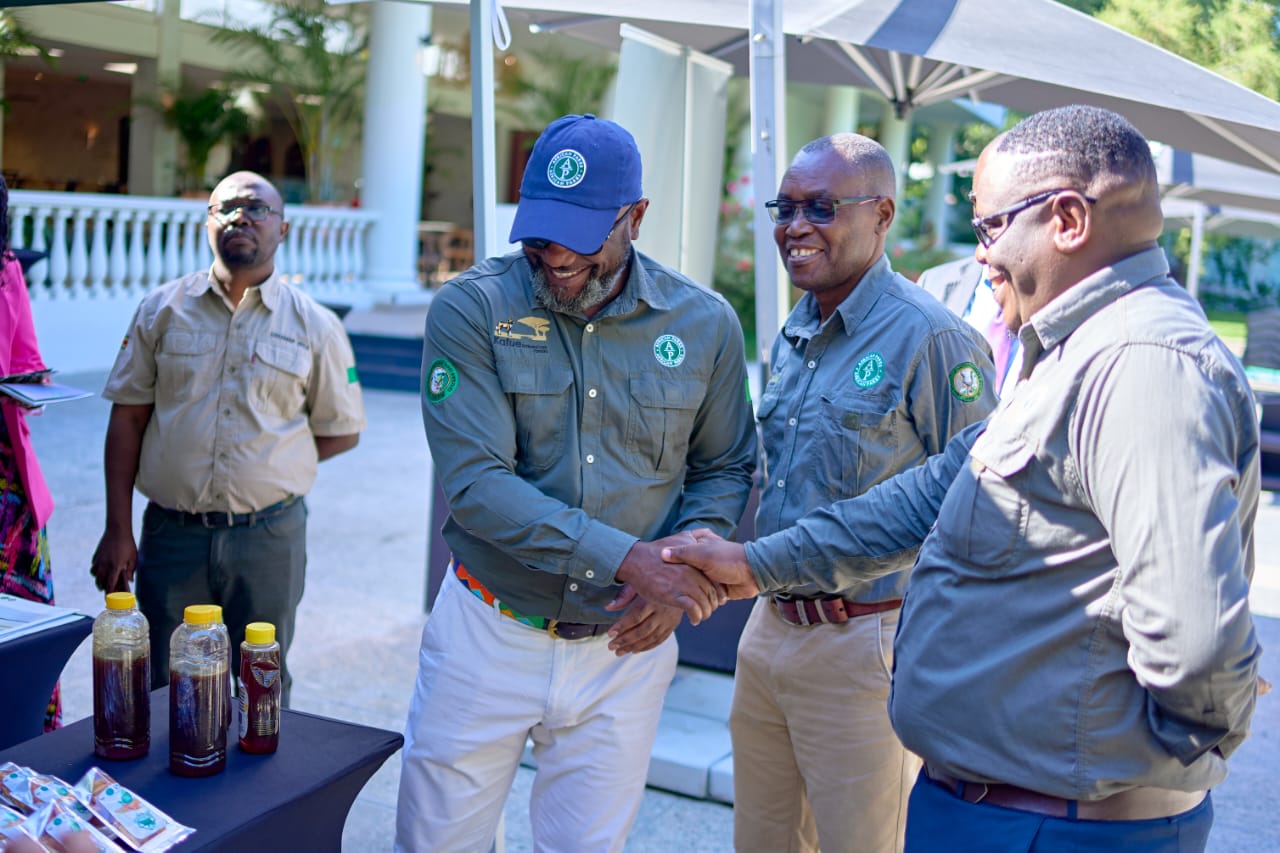
At the African Parks Day, African Parks chief operations officer Charles Wells said this approach is central to long-term sustainability.
“Communities are not on the margins of conservation; they are custodians of these landscapes and essential to their future,” he said.
For communities living around protected areas, the transformation is increasingly visible in both livelihoods and environmental awareness.
Induna Mundandwe, a community representative from a conservation-adjacent area, said residents are beginning to see real benefits from improved park management, including access to regulated forest products and reduced illegal activities.
“We are happy that now there are more controlled and sustainable forest products coming from these areas,” he said. “People are beginning to benefit in a way that still protects the resources for the future.”
He noted that poaching levels have declined significantly due to stronger enforcement and closer cooperation between park authorities and surrounding
communities.
Before, poaching was a big challenge, but now there is more awareness and stronger protection on the ground,” he said.
Induna Mundandwe also highlighted the importance of conservation education programmes in shifting community attitudes.
“Our people are being taught the importance of wildlife and why we must care for it,” he said. “This education is helping communities understand that when wildlife is protected, everyone benefits — not only today, but for generations.”
Now the communities in not only Kafue and Liuwa national parks but Bangweulu too are seeing investment as a conservation tool.
Since taking on management mandates in Zambia, African Parks has significantly exceeded its original investment commitments over US$34 million invested in five years against US$20 million commitment, approximately US$17 million annual investment flow, and more than US$70 million total cumulative investment
These funds have supported various initiatives that protect wildlife like anti-poaching operations, and ranger posts, wildlife monitoring systems and tourism development.
For Government, the partnership is part of a broader strategy to position tourism as a key pillar of economic diversification alongside mining and agriculture.
Minister of Tourism Rodney Sikumba said improved park management is expected to attract investment, expand tourism infrastructure and generate rural employment linked to wildlife economies.
“African Parks committed to investing US$20 million over a 20-year period. Impressively, within just five years, over US$34 million has already been invested – surpassing the initial commitment,” he said.
Despite progress, challenges remain including sustaining long-term financing, managing human-wildlife conflict and ensuring equitable distribution of benefits.
Experts caution that conservation outcomes take decades to mature and require consistent policy and financial commitment.
Zambia’s approach is increasingly being recognised within southern Africa, particularly within transboundary ecosystems such as the Kavango-Zambezi landscape.
By combining ecological restoration, structured financing and community participation, the country is positioning itself as a reference point for conservationled development.
As the sector evolves, it is clear that conservation success is no longer measured only by wildlife recovery but by whether communities living alongside protected areas are fully part of the value, benefits and future of those landscapes.