
MARGARET CHISANGA
Chongwe
A COLLABORATIVE effort between Fountain Gate Crafts and Trades School and Liebherr Zambia Limited, with support from German development partners, will introduce a dual vocational education and training (Dual VET) model set to combining classroom instruction with hands-on industry experience.
The initiative, valued at approximately €4 million will be implemented over the next three years.
Acting Minister of Technology and Science, Elvis Nkandu, who officiated at the ground-breaking ceremony on thursday at Chongwe Fountain Gate, said the skills development project comes at a critical time when Zambia’s mining sector is expanding rapidly, creating an urgent need to align training with industry demands.
He stressed that investing in skills development is essential for achieving Zambia’s ambition of increasing copper production to 3 million metric tonnes by 2031 and attaining middle-income status by 2030.
The Minister highlighted the importance of bridging the gap between theoretical learning and practical skills.
“This project presents a timely and strategic intervention required to align technical education with the evolving demands of the mining and construction sectors,” he said.
He said by integrating practical, industry-led training with formal education, the project is set to redefine vocational skills development.
The Minister further underscored Government efforts to enhance skills development through competence-based training, the TEVET Fund, and the Graduate Empowerment Programme, which equips young graduates with tools to become self-reliant entrepreneurs.
“Despite progress, we acknowledged key challenges, including: A youth unemployment rate exceeding 17%, Limited absorption of TEVET graduates into formal employment and a
shortage of skilled professionals in the mining sector,” he said.
He called on more industry players to emulate this partnership model and actively contribute to workforce development.
Mr Jeffrey Johnson of Liebherr highlighted that the project represents a shift from conventional vocational training to an industry-driven, technology-focused apprenticeship model.
He emphasized that the effectiveness of advanced mining equipment depends largely on the competence of those who operate and maintain it.
“The four-year apprenticeship programme is structured to ensure a balance between theory and practice: The first three years follow a 50/50 split between classroom learning and on-site industrial training while the final year is fully dedicated to practical, workplace-based training,” he said.
He said overall, 62.5% of the training is industry-based, with the programme offering three specialized streams: advanced heavy-duty mechanics, advanced component remanufacturing
and advanced high-voltage and industrial instrumentation.

“These high-demand technical skills are currently scarce in Zambia and are critical for modern mining operations. The training will utilize modern workshops, simulation technologies, and real industry environments to ensure graduates are job-ready,” he said.
Mr Johnson also emphasized inclusivity, particularly the participation of women in technical training, and the integration of safety, digital tools, and sustainable practices into the curriculum.
He said the initiative is not merely a training programme, but a long-term investment in Zambia’s technical capacity, productivity, and economic growth.
Ms Anne Keppler, Regional Director, DEG (Development Finance Institution) reaffirmed the importance of private sector involvement in driving sustainable development, job creation, and innovation. She explained that DEG’s role is to support businesses that contribute to both economic growth and public benefit.
She highlighted that the project, supported through the developPPP programme, exemplifies successful public-private collaboration.
By investing in skills development, the initiative not only supports business growth but also strengthens communities and national development.
Ms Keppler expressed confidence that the training facility will become a ‘centre of excellence where young people can develop their potential’.
Mr Nils Annen, State Secretary, German Federal Ministry for Economic Cooperation and Development emphasized the long-standing partnership between Germany and Zambia, rooted in shared efforts to create opportunities, particularly for young people.
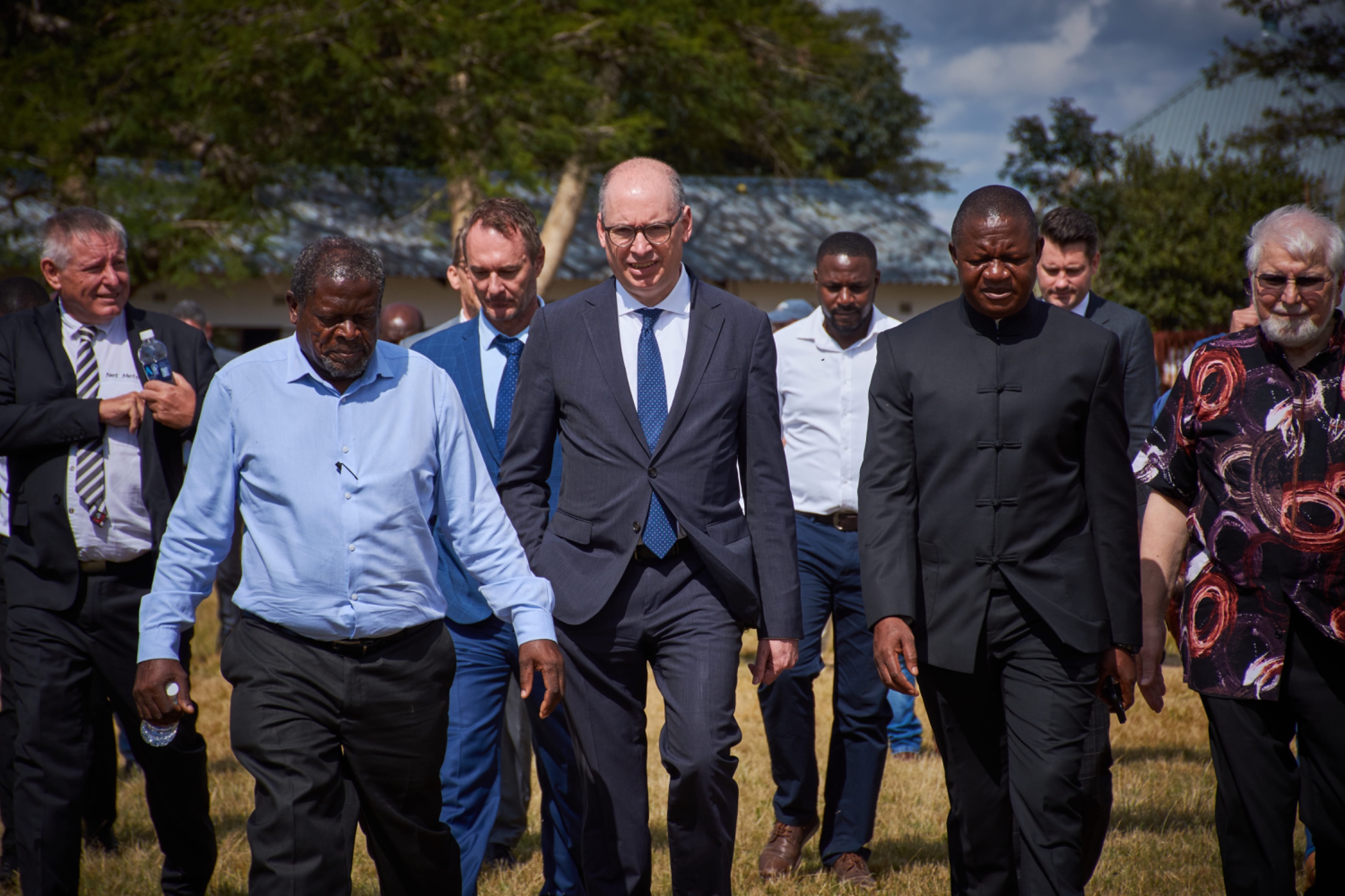
He noted that the project reflects a broader commitment to strengthening technical education and fostering private sector investment.
He commended Liebherr and Fountain Gate for their leadership and social commitment, highlighting the importance of translating development ideas into tangible outcomes.
He expressed optimism that the initiative will inspire further collaborations and encourage more stakeholders to invest in skills development.
He reaffirmed Germany’s support for Zambia’s development agenda and expressed confidence in the project’s long-term impact on youth employment and industrial growth.