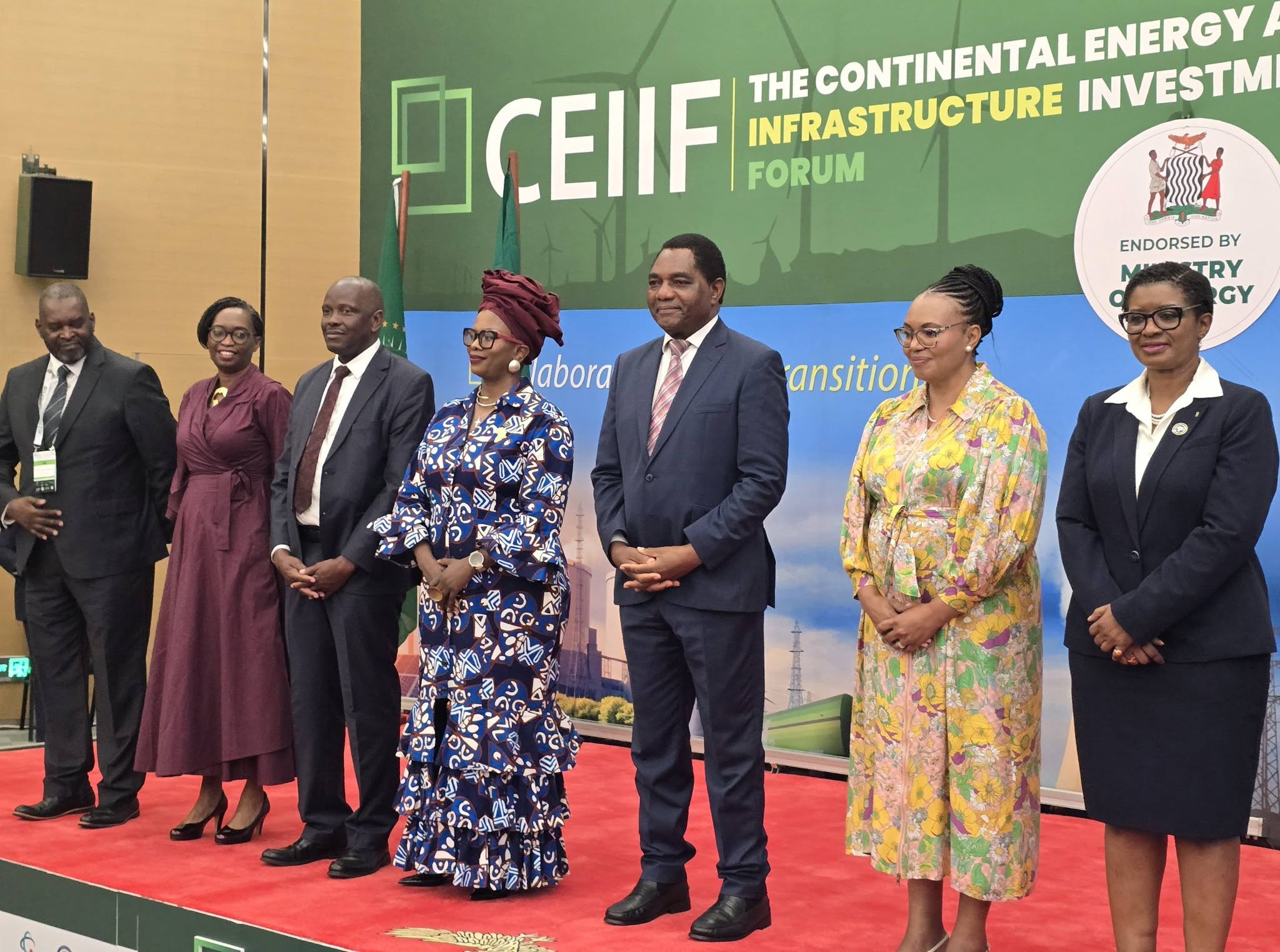
- Says more than 600 million Africans still live without electricity
DOREEN NAWA
Lusaka
AFRICAN Union (AU) commissioner for infrastructure and energy Lerato Mataboge has urged African nations to prioritise energy integration, stressing that reliable electricity is not just about megawatts, but about improving human lives and dignity.
Speaking at the opening of the Continental Energy and Infrastructure Investment Forum (CEIIF), themed “Collaborate, renew, transition”, commissioner Mataboge highlighted the human impact of stable energy systems.
“In a small township on the edge of a growing African city, a woman runs a fish business,” she said. “For years, her problem was not customers, it was electricity. When the power went out, the freezer stopped. Fish spoiled, and income vanished overnight. Some days she sold at a loss to avoid waste. Other days she closed entirely. And then the power became reliable… her business became stable, school fees were paid on time, credit became possible, dignity was restored.”
Ms Mataboge emphasised that while ordinary citizens may never witness the meetings, policies, or continental strategies behind reliable electricity, they feel its benefits in their daily lives. “What she will know is that where it mattered most, Africa’s energy systems did not fail her. That is what energy integration means. Not megawatts, but dignified human moments, the essence of being alive,” she said.
The commissioner underscored that Africa cannot achieve energy security in isolation.
“More than 600 million Africans still live without electricity. This is not simply an access gap; it is a developmental constraint,” she said.
Through initiatives such as the African Single Electricity Market, the Programme for Infrastructure Development in Africa (PIDA), and the Continental Power Master Plan, AU member states are connecting national efforts into regional and continental systems. This integration allows power to flow across borders, shares investment risks, and creates scale, she said.
Ms Mataboge highlighted progress in 2025, including the establishment of governance structures and continental regulatory frameworks across all regions, and said 2026 will focus on shifting from frameworks to bankable infrastructure pipelines.
“Through PIDA Part 2, 69 priority regional infrastructure projects have been identified, most in energy. These include climate-resilient transmission corridors, cross-border interconnectors, and renewable energy integration,” she said.
She also stressed the need for a balanced energy mix.
“Renewables alone do not power industries. No region in the world has been powered by renewables alone. Africa’s energy transition must be just, and it must prioritise inclusion,” Ms Mataboge said.Commissioner Mataboge called for continental cooperation.
“When Africa connects, Africa rises, lives are improved, and dignity is restored. Let us use this platform to connect Africa,” she said.
The CEIIF gathering brings together policy-makers, investors and stakeholders to accelerate Africa’s energy transition, with a focus on renewable energy integration, industrialisation and regional collaboration….