TRYNESS TEMBO
Lusaka
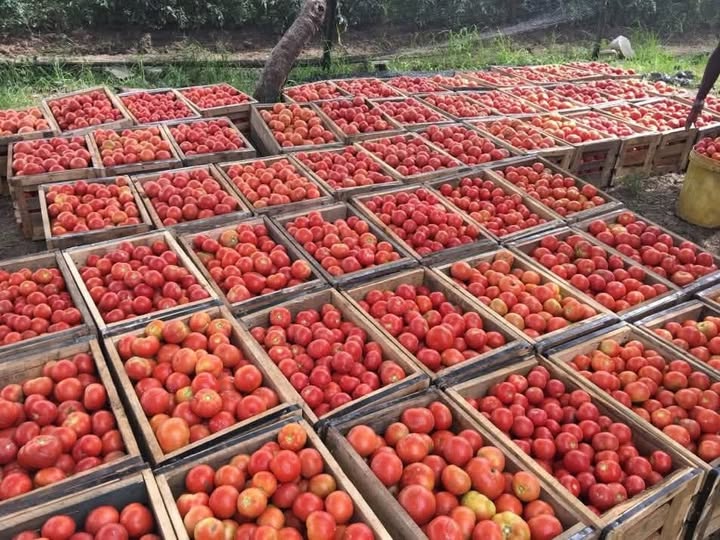
A MASSIVE oversupply of tomatoes has hit the major local market in the capital city, Soweto, sending prices tumbling and leaving many small-scale farmers in a state of regret.
On Monday, the price of a box of tomatoes was trading as low as K100.
In an interview, Zambia Fruits and Vegetable Association (ZFVA) secretary general Gideon Kalima revealed that the current market saturation has shifted the bargaining power entirely to consumers, leaving producers at the mercy of buyer-defined prices.
“The price of a box of tomatoes, which can peak at K800 during periods of scarcity, has reportedly plummeted to as low as K100,” Mr Kalima noted.
He said in retail spaces like the local market and townships, the impact is visible.
“Instead of one tomato for K5, you are finding large heaps for the same price. For K10, you are almost getting a whole net [meda],” he said.
Mr Kalima explained that the current surplus is a result of a ‘herd mentality’ which is the tendency for people’s behaviour or beliefs to conform to those of the group they belong to within the farming community.
He said after witnessing high prices during the previous rainy seasons, many farmers ventured into production.
Mr Kalima added that typically, in January and February, there is a shortage of the commodity due to persistent rains leading to floods, pest infestations specifically red spiders and worms and the high costs of protective chemicals.
“Farmers who are well-equipped and strategic usually benefit from these shortages because they can afford the chemicals to sustain their gardens. But this year, everyone made plans at the same time.
They have ‘broken’ the market,” he said.
Mr Kalima however, warned that this ‘price bloodbath’ will likely lead to a secondary crisis.
He noted that because farmers have been discouraged by heavy losses, many might now be contemplating abandoning tomato production for other crops next year.
“At the moment, I don’t think there is a person in their right mind making plans to venture into tomatoes. This will create another shortage two months from now,” Mr Kalima cautioned.
As the industry grapples with these fluctuations, he urged farmers to be more strategic and informed to avoid the “boom and bust” cycles that continue to threaten the stability of the country’s vegetable value chain…https://enews.daily-mail.co.zm/welcome/home