- Debt restructuring, governance reforms restoring confidence
ABIGAIL CHIFUSA
Lusaka
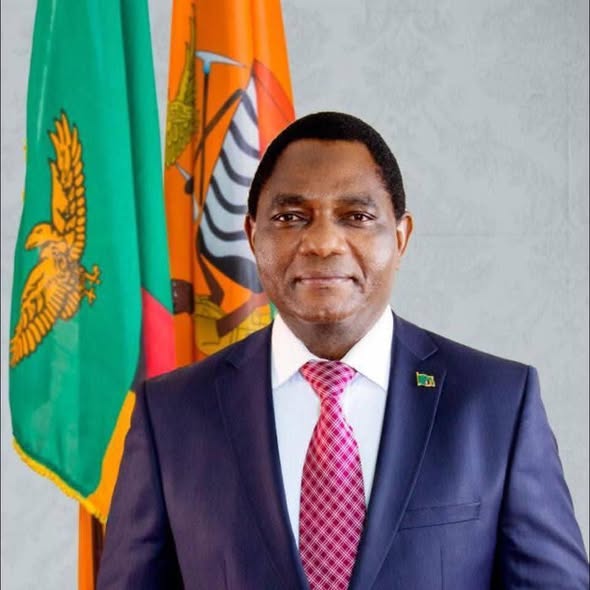
LOOKING back, President Hakainde Hichilema reflects on the state of the nation in 2021, speaking openly, clearly showing how serious the situation Zambia was in at the time.
“When you put us in office in 2021, it was a very critical situation we were faced with as a country. We may argue who was in office, who did what, but we cannot argue about the fact that we were in a very difficult situation,” he said.
It was a period defined by unsustainable borrowing, rising debt crisis, failing investor confidence and an economy weighed down by years of financial strain.
“Money was borrowed and we were living beyond our means as a country. We had a very huge debt mountain,” President Hichilema said.
Four years later, the outlook has shifted. About 94 percent of eligible external debt is now restructured.
This is a big achievement confirmed by both the New Dawn government and international partners, as Zambia has started to shed its “high-risk, basket case” label and re-emerge as an attractive investment destination.
International rating agencies have taken notice. Standard & Poor’s (S&P) recently upgraded Zambia’s long and short-term foreign-currency credit ratings from Selective Default (SD) to CCC+/C, indicating the country’s formal exit from default status.
President Hichilema describes this step as a confirmation that the country has moved “from being a warning to investors to becoming a viable place to do business.”
“Today, we are seeing a resurgence in investments. Zambia is now a meeting place for business talks because of the hard work we have put in” he said.
Mr Hichilema urged citizens to seize the moment.
“Now that Zambia is attractive, let’s ask ourselves in every transaction: how is this going to create jobs for the citizens of Zambia? Let us not go back to where we were,” he said.
Minister of Finance and National Planning Dr Situmbeko Musokotwane describes Zambia’s current economic situation as a multifaceted, multi-stage undertaking involving negotiation, diplomacy, and detailed technical work.
“The first we undertook to restructure the debt was organised through the IMF and cooperating partners. The purpose was to set out the commercial terms under which the debt would be restructured,” he said.
Dr Situmbeko said this led to intensive discussions with official creditors, which are countries that previously lent money directly to Zambia.
“After extensive negotiations, a memorandum of understanding was signed by 16 official creditors, covering 94 percent of the debt owed. All participating countries committed to follow the agreed commercial terms,” he explained.
Dr Situmbeko said the final step was converting these commitments into legally binding bilateral agreements.
“Each creditor has its own process for approving agreements, which takes time. But the direction is clear, we have moved from 44 percent to 57 percent coverage in the initial bilateral stage, and progress continues steadily,” he said.
Dr Musokotwane pointed out that Zambia’s debt burden has been eased.
He said without restructuring, Zambia would have been forced to pay US$2.6 billion on Eurobonds alone in 2024.
“Those large payments have now been avoided,” he said.
This has freed up fiscal space urgently needed to support education, health, agriculture, and public services that had been starved of resources.
“In 2020, only nine Ngwee of every Kwacha collected was available to government beyond debt service and salaries. That is why sectors like education suffered. Debt restructuring has relieved that pressure,” Dr Musokotwane said.
The Economics Association of Zambia (EAZ) describes the debt restructuring milestone as transformative.
“Public access to debt information is key. Zambia’s 94 percent debt restructuring shows that the Government successfully engaged creditors to extend repayment periods. This gives the nation time to implement macroeconomic measures without undue financial stress,” EAZ national secretary Nicholas Mainza said.
He acknowledged that ordinary citizens may not immediately feel the change but emphasised that the long-term impact will be significant.
“Over the next three, five, even ten years, sectors like education, health and agriculture will receive more funding,” he said. “This will positively affect livelihoods,” Dr Mainza said.
Small and medium enterprises, previously constrained by high borrowing costs and limited liquidity, are also expected to benefit as government pressure eases and financial institutions begin to lower risks.
To understand the impact of credit rating upgrades by S&P Global and Fitch Ratings, Dr Musokotwane explained that the country must confront its recent past.
He said between 2015 and 2021, Zambia faced deepening structural and governance challenges such as economic shocks, escalating debt, shrinking foreign reserves, and weakening public financial controls.
“When copper prices fell in 2015, the impact on our economy was immediate. Thousands of jobs were lost. Instead of slowing borrowing, Government at the time accelerated it to sustain spending. But borrowing was not matched with strong controls,” Dr Musokotwane said.
He explained that by 2017, the IMF classified Zambia as being at high risk of debt distress. Donors soon froze funding to programmes such as the Social Cash Transfer due to concerns over financial management.
Dr Musokotwane noted that policy unpredictability, including the liquidation of a major foreign-owned mining company, further undermined investor confidence.
He said environmental governance also deteriorated. Illegal timber exports exposed Zambia to accusations of environmental crimes.
Dr Musokotwane said droughts also worsened food insecurity, further damaging the country’s international standing.
“When Zambia missed a Eurobond coupon payment in 2020, we became Africa’s first sovereign to default during the pandemic. By 2021, Zambia entered with a burden of lost trust,” he explained.
Dr Musokotwane said with all these challenges, the New Dawn government prioritised restoring that trust.
“First, we restored fiscal discipline. Wasteful expenditure was cut and budget controls strengthened. Second, we restructured the debt. Third, we rebuilt foreign reserves and stabilised monetary policy,” he said.
Dr Musokotwane said governance reforms were also key.
“Procurement systems, oversight structures and controls of leakages have been strengthened. Investors made it clear that Zambia’s credibility problem was not only about debt, but also about trust in how public resources were managed,” the Minister of Finance said.
These reforms, combined with stability in the mining sector and a shift towards consultation over confrontation, have started to pay off.
Credit ratings determine how expensive it is for a government to borrow, how much banks charge businesses, and whether large infrastructure projects are feasible.
“Zambia’s upgrades show that the country has moved from being priced as a risky, default-prone destination to being recognised as a recovering sovereign with a credible path back to the markets,” Dr Musokotwane said.
Zambia Institute of Policy Analysis Research (ZIPAR) interim executive director Zali Chikuba said the ratings demonstrate growing confidence in the management of Zambia’s economy.
“Even though we are still speculative, we have a stronger financial position. There is growing confidence in the management of the economy,” he said.
Mr Chikuba noted that reforms have laid the foundation for gradual improvements in people’s lives.
“Not everyone will feel it at the same time, but more people will escape joblessness. Salaries will improve as the economy expands. The transformation has begun,” he said.
Fitch Ratings recently upgraded Zambia from Restricted Default (RD) to B-, officially showing that Zambia is no longer in default and is slowly recovering from the economic crisis that started in 2020.
For the first time in years, important fiscal space has opened up. The country can channel resources into expanding free education, strengthening healthcare, boosting agriculture, and building energy and transport infrastructure.
At the same time, Zambia becomes more attractive to foreign investors who now see the nation as safer, more stable, and more predictable, boosting investment in key industries like mining, agriculture, energy, and manufacturing.
Increased confidence also strengthens the kwacha, helping to stabilise the currency and gradually reduce inflationary burdens.
When investments increase, businesses expand, new job opportunities emerge, all contributing to overall economic growth.
Ultimately, Zambia’s upgraded credit standing now shows renewed global confidence and positions the country for a more sustainable and prosperous economic future.
President Hichilema, however, emphasised one message above all, “Let us not go back there.”