
KENNETH DAVID BUCHIZYA KAUNDA is not a name one simply glances at and flips past in the pages of African history.
His influence stretches beyond Zambia’s borders, echoing across Africa and beyond.
Though he is gone, his legacy continues to shape contemporary thought about diplomacy, solidarity and peaceful coexistence.
At the heart of Kaunda’s diplomacy was a deliberate attempt to “domesticate” the struggle of Southern Africa within the continent itself.
During a time when colonial rule and apartheid dominated the region, Kaunda insisted that African problems required African solutions.
Under his leadership, Zambia became a sanctuary and operational base for liberation movements from countries such as Namibia, Zimbabwe, Angola and South Africa.
Refugees and freedom fighters found refuge in Zambia, turning the young nation into a strategic centre for regional liberation.
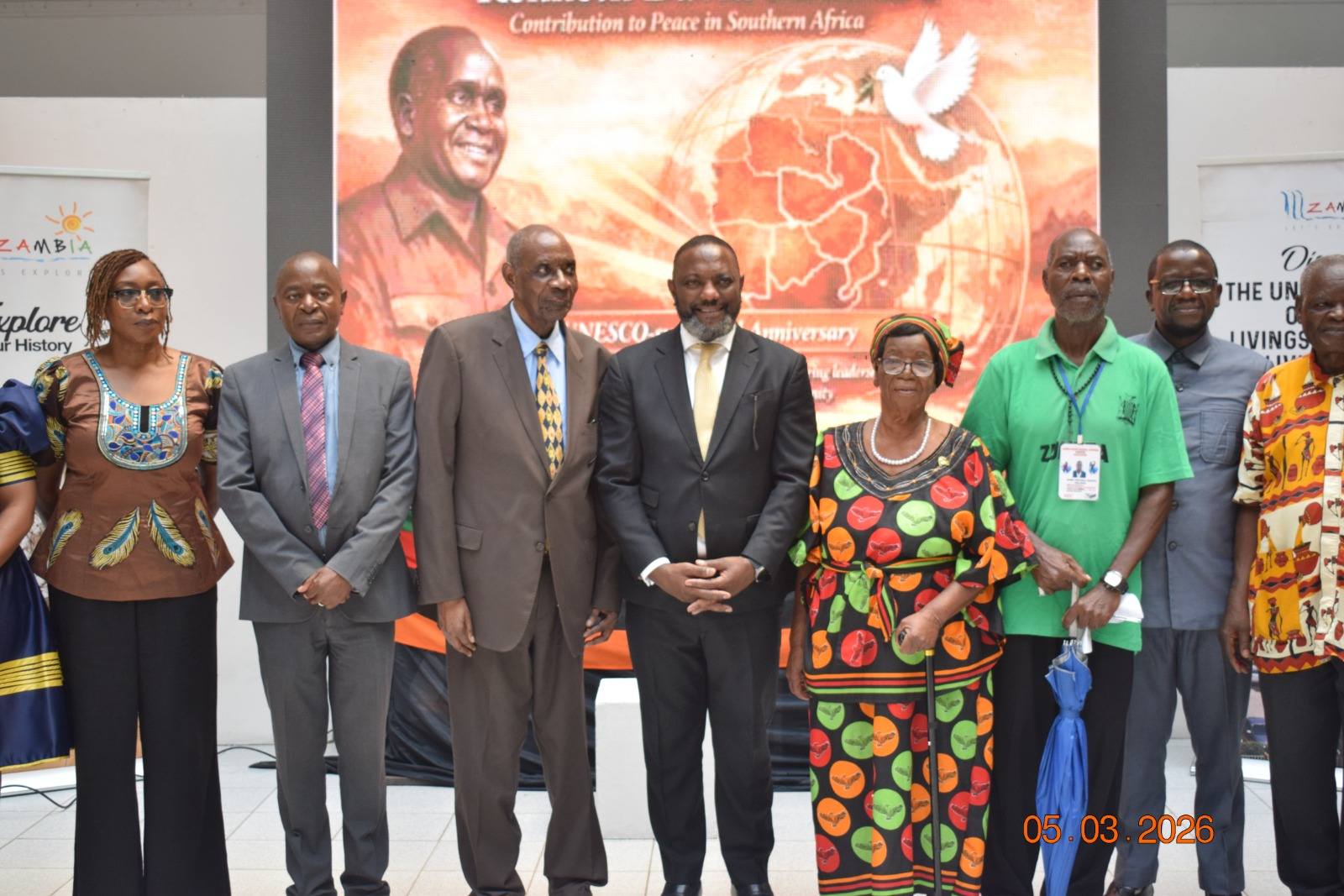
Fifty years after the founding President championed peace and liberation across Southern Africa, his legacy is once again at the centre of reflection.
The launch of the exhibition commemorating “50 Years of Kaunda’s Contribution to Peace in Africa” is not merely a historical exercise; it is a reminder that the ideals he championed remain vital in today’s political and social climate.
The exhibition, organised through a collaboration between the National Museums Board of Zambia, UNESCO and the Zambia National Broadcasting Corporation (ZNBC), reflects this expansive legacy through archived newspaper cuttings, speeches, artistic interpretations and historical documentaries of those days.
National Museum Board director general George Mudenda says that the event is not simply about remembering a historical figure but about honouring a living legacy.
“We gather not just to commemorate an anniversary but to pay tribute to a legacy,” Mudenda says.
“Kaunda’s vision reminds us that cultural heritage and memory are not just treasures of the past, but guiding lights for the future.”
Mudenda says that the exhibition represents a shared responsibility among institutions to preserve and nurture the values Kaunda stood for.
According to him, artists, journalists and historians all play a role in ensuring that the ideals of peace and unity continue to resonate across generations.
Representing UNESCO, Samson Kantini says Kaunda is one of the most consequential leaders in Africa’s modern history.
“UNESCO associates itself with significant events that shape humanity,” Kantini says.
Kantini expressed hope that the exhibition will travel across Zambia so that communities nationwide can engage with the messages of peace, solidarity and liberation that Kaunda championed.
Family representative Tilyenji Kaunda says Africans should embrace and tell their own stories.
He believes that documenting the contributions of pioneers such as Harry Nkumbula and Simon Kapwepwe ensures that younger generations understand the path that led to independence and regional freedom.
Minister of Tourism Rodney Sikumba says the exhibition will instil pride in Zambia’s liberation history.
“At a time when Southern Africa was oppressed by colonial rule, Kaunda stood firmly for dialogue and peace,” Sikumba says.
“Lasting development can only flourish where peace exists.”
The minister further says that Zambia’s stability and growth are rooted in the spirit of coexistence fostered by leaders like Kaunda.
In an era marked by political contestation, he reminded citizens that peace should never be taken for granted.
Indeed, even leaders across the region continue to recognise Kaunda’s impact.
As Zambia approaches another election cycle, the exhibition carries an implicit message: peace is not automatic.
It is a value that must be protected and nurtured, just as Kaunda did during the most turbulent years of Southern Africa’s history.
In many ways, the exhibition serves as both history lesson and moral compass.
It reminds visitors that the freedom and stability enjoyed today were shaped by sacrifices made decades ago.
Perhaps the essence of Kaunda’s philosophy is best captured in the words echoed at the exhibition’s launch by Tourism Minister.
“If you protect peace, peace will protect your future.”