
DOREEN NAWA
Lusaka
WORLDFISH says new digital climate and fisheries information tools being rolled out for fishers in Zambia and Malawi are signalling a turning point for Africa’s aquaculture and blue economy ambitions, offering real-time data to help communities anticipate heatwaves, manage catches sustainably and build resilience to climate shocks.
The tools, supported by WorldFish and partners, provide advance climate alerts and fisheries data that allow small-scale fishers and fish farmers to plan production cycles, protect stocks and reduce losses linked to extreme weather.
Similar digital fisheries monitoring systems are already being adapted across Kenya, Mozambique and Zanzibar, helping governments and communities make better, data-driven decisions on aquatic resource management.
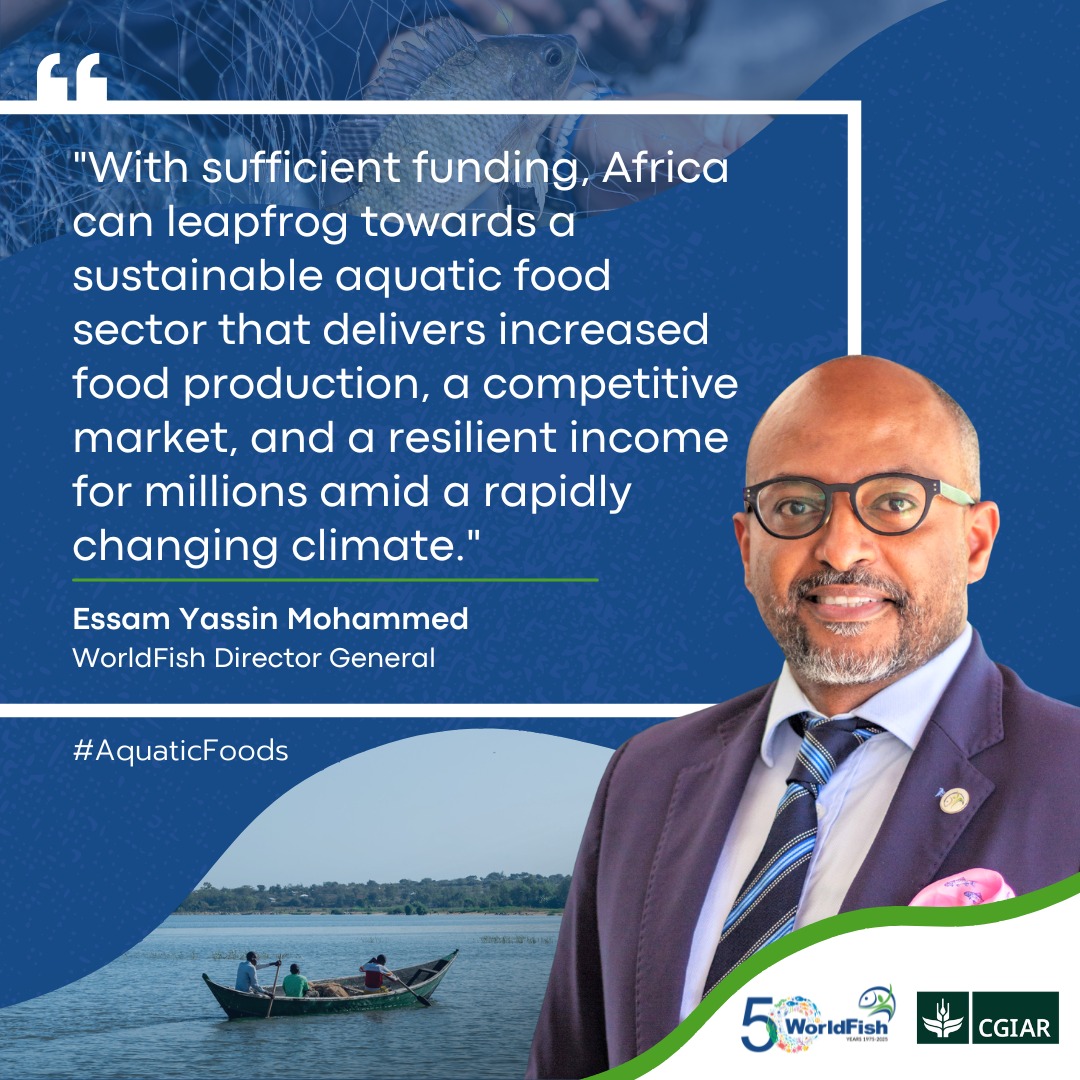
WorldFish director general Essam Mohammed says these innovations demonstrate that Africa now has the technology and knowledge needed to unlock the full potential of its aquaculture sector — but sustained investment is critical.
“Aquaculture is the fastest-growing food sector in Africa and offers significant returns on investment, while directly contributing to food security, dignified livelihoods and economic growth,” Dr Mohammed said. “With the right financing and policy support, Africa can leapfrog toward a sustainable aquatic food system without repeating the environmental trade-offs seen elsewhere.”
He said Africa’s aquaculture production has expanded fivefold over the past two decades to about 2.5 million tonnes.
However, this still represents less than three percent of global farmed fish production, compared with Asia’s more than 90 million tonnes, accounting for over 90 percent of the global total.
Drawing lessons from Asia’s success, Dr Mohammed said initiatives such as the Asia-Africa BlueTech SuperHighway and Climate-Resilient Aquaculture Systems for Africa are helping transfer proven innovations to African contexts.
He said one example is the scaling up of genetically improved farmed tilapia (GIFT) in countries such as Kenya, Ghana and Nigeria.
Developed through selective breeding, GIFT delivers faster growth, improved nutrition and higher incomes for farmers using fewer inputs.
creation and the economic development of our country,” she said…https://enews.daily-mail.co.zm/welcome/home