
MAZOMBWE BANDA
IN A landmark move aimed at eliminating malaria by 2031, the Zambian government, in partnership with UNICEF and Vaccine Alliance-Gavi, has officially introduced malaria vaccine into its routine immunisation programme.
The initiative, launched last month in Mansa, Luapula Province, targets 500,000 children across 83 districts and marks Zambia as the 24th country globally to adopt the vaccine.
The country has already received 532,200 doses of the vaccine, which will be administered free of charge through health facilities, outreach services, and community-based approaches.
The vaccine is designed to complement existing malaria interventions such as insecticide-treated nets (ITNs), indoor residual spraying (IRS), rapid diagnostic testing, and preventive care for pregnant women.
Despite these efforts, Zambia remains one of the world’s most malaria-endemic countries, accounting for 1.4 percent of global malaria cases.
The introduction of the vaccine is expected to significantly reduce the disease burden, especially among children under five, who are most vulnerable to malaria related complications.
The vaccine rollout began in Mansa, a region particularly susceptible to malaria due to its wetland geography.
Children will receive four doses of the vaccine: at six months, seven months, eight months, and one year six months of age.
The launch coincided with the unveiling of the Costed Primary Health Care Strategy 2025–2031 and its Operational Plan 2025 2026, both developed by the Ministry of Health to strengthen Zambia’s healthcare delivery.
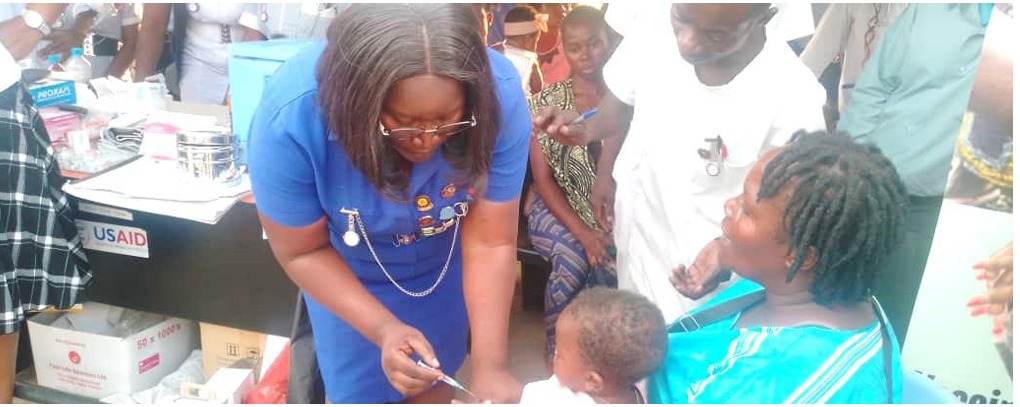
Health professionals were present at the launch to administer the vaccine to infants from Mansa District, where 14 babies received their first dose.
Among them was the child of 19-year-old Miriam Chomba, from Namwande Township.
“My baby is six months old. I am happy that my baby is one of the first babies to receive this vaccine. I know that my baby can get malaria, but it cannot be for too long or that severe—she has at least received the vaccine,” she said.
For 54-year-old Rebecca Mukosa, from Musumali Township, the vaccine represents hope and protection for her grandchild.
“I brought my grandchild to receive a vaccine. His mother has gone for work. I encourage my fellow women to be taking their children to the hospitals, especially here in Mansa, where we’ve a lot of malaria cases. I will come again after a month so that he receives a second vaccine. I can’t afford to lose my grandchild to malaria,” she said.
Mansa District health officer for maternal and child health Catherine Kasamwa expressed optimism about the vaccine’s potential.
“We deal with several incidences of malaria as primary health care, and we’re very happy that we’ve finally launched the malaria vaccine. We’re optimistic that it will be a game-changer,” she said.
However, health officials also acknowledged challenges in public health engagement.
Dr Mwenya Tazrussel, head of clinical care at Mansa General Hospital, highlighted poor health seeking behaviour among some community members.
“Mansa is the second-level hospital in Luapula Province, which has about 1.6 million people. Every time someone gets sick, the first thing they think of is trying to use tree root. As a result, patients are ending up dying from ailments that we can easily treat,” he said.
Dr Tazrussel, who had recently recovered from malaria himself, emphasised the importance of prevention.
“If we can prevent malaria, it means we’re heading in the positive direction. Most of our communities are in far-flung places, so accessing health care is a challenge. If they can get a vaccine, they’re already protected and won’t need to travel long distances for treatment,” he said.
“Malaria prevention means we are going to reduce the number of children suffering and dying from this disease.”
Traditional leaders have also pledged their support. Chief Chisunka, chairperson of Luapula Province of Chiefs, committed to encouraging parents to vaccinate their children.
“I appreciate the government for selecting our province for the launch of the vaccine. We all know that our region has been significantly affected by the disease,” he said.
“We’ll encourage our people, especially mothers, to take their children to the clinics. A healthy nation is a prosperous nation.”
UNICEF chief of health Atnafu Asfaw reaffirmed United Nations’ commitment to supporting Zambia’s malaria elimination goals.
“The introduction of the malaria vaccine into routine immunisation is truly a game changer. In 2023 alone, more than 400,000 African children died from malaria,” he said.
Minister of Health Elijah Muchima, who officially launched the vaccine and the health strategy documents, urged parents to take advantage of the programme.
“In Zambia alone, 30,000 people contract malaria and one person dies from the disease every day. Government will take the lead in creating partnerships and advocating for enhanced national commitment in finding solutions to threats caused by malaria,” he said.
The malaria vaccine represents a significant step forward in Zambia’s public health strategy.
With strong support from Government, international partners, health professionals, and community leaders, the country is poised to make substantial progress towards its goal of eliminating malaria by 2031.
The success of the programme will depend not only on the availability of vaccines but also on sustained public engagement, education, and access to healthcare services—especially in rural and high-risk areas.
As the vaccine rollout continues, the stories of mothers like Miriam Chomba and grandmothers like Rebecca Mukosa reflect the hope and determination of communities across Zambia.
Their commitment to protecting the next generation from malaria is a powerful reminder that health interventions are most effective when embraced by the people they are meant to serve.